Showing posts with label Public Health. Show all posts

Wednesday, 17 August 2016

Opinion Piece: Why communications is necessary for health systems research.

Communications is one of the most integral components in any system. As systems are composed of various units, communicating among each unit allows for the system to achieve its function. If said medium is efficient, It allows for equitable resource allocation while providing a medium by which data may be collected and studied.

What is Health Systems Research?


Why Talk About Communications?

In my opinion, communications is integral to the sustainable and fluid functioning of any health system. Whether by reporting or effective social messaging, the need of long term study can be demonstrated and thereby funding secured for continued study. For health systems research, it allows for effective data retrieval and sensible comprehension of the results. As a health system is accountable to the society it serves, it is necessary to adopt specific messaging vehicles that reach the national audience and maximizes on exposure.

Understanding the message itself is a whole different ball game; the comprehension of the message you communicate varies based on culture and other socio-economic factors. You could positively or negatively frame your health promotion and education messages with varying behavioral change effects on message recipients. Listen to this short clip on “the power of words” by the 2015 World Champion of Public Speaking. I believe he outlines the power of messaging quite simply.


Communications is necessary for health systems research because it involves people, institutions and activities to function equitably and effectively. One must communicate well in order to achieve efficient functioning of various component pieces or partners, prevent the unnecessary allocation of resources and adhere to leading standards of practice. Above all, your message should answer the most important question...

Why should I care about your MESSAGE?

When receiving any health message, an organization or individual should obviously tailor communications to the audience and answer the aforementioned question well. Whether by the use of templates or creative messaging, vivid and clear communications are what will help you achieve your objective. I personally believe in the power of story telling. Stories are learnt but they can also be relayed to another very easily. 

So why is communications necessary for health systems research? 

Communications lead, inform, motivate and inspire the positive change we wish to see in the world. Isn't this why we go into research? 


Sunday, 14 August 2016

When they Breed, You will Bleed

“If they breed, you will bleed” is a message you would see on a billboard, warning of the dangers posed by dengue in Sri Lanka. According to the WHO, two-fifths of the world’s population; are at risk of dengue fever, with an estimated 50 million infections annually around the globe. As Sri Lanka and a few other South Asian countries share the classification of “Category A country” by the WHO; the vector borne disease remains one of the leading causes of hospitalization and death among children. According to the Epidemiological Unit, Ministry of Health, Sri Lanka; 25164 suspected dengue cases have been reported island wide for the year 2013 (Reported Oct 14th 2013). Of which 48.11% of patients were from the western province of the country, where the population density is the highest on the island.

The prevention campaign which aimed to curb the spread of this disease was initiated in early 2010.  From the implementation of the legal act (National Dengue Prevention Act), adjusting national management guidelines and the vast research employed into finding a biological control for the dengue mosquito; Sri Lanka has been rushing to purge the deadly virus off its grounds. The recent advances in entomology research founded a new species of mosquito in Sri Lanka, “Topomyia". It’s relevance to dengue is that in its larval stage; the Topomyia larvae would feed on the larvae of the genus Aedes. It is a hope that this discovery will help in the multi-pronged advance against the dengue menace.

Vector borne diseases have been plaguing the world since our inception on this planet. Dengue, Malaria, Filariasis and Yellow Fever, are emerging mosquito borne diseases. Their threat to human health remains detrimental in some parts of the globe more than others.  For example; In Sri Lanka, Dengue prevention campaigns sprouted overnight creating awareness and policies aimed at controlling the endemic. The National Dengue Prevention Act in particular caught my attention. It has been constantly implemented and the fact that fines and legal prosecution are now used as protocols for fending off the hemorrhagic fever is nauseating.

Considering that the vector mosquito breeds in pockets of clean stagnant water, the breeding grounds are bound to be more numerous in the low socioeconomic areas of the country. With terrible housing conditions, overcrowding and roofs that are barely kept together; a perfect environment for water collection is produced. Marginalizing individuals in this way is a mockery of any democratic governing body. It would make more sense to provide incentives e.g.; tax deductions, if the public health inspectors are satisfied.


I also wanted to touch on the fact that a new mosquito species has been found. With more research being funded into that topic; the intention I believe is to incorporate this new species of mosquito in the hopes that the Aedes mosquito will be kept at bay. My concern is that a new viral disease may emerge by simply introducing large numbers of this new organism in to the environment. Tipping the scales of a biological food chain is no simple safe task! Using Mother Nature’s own, to alter our surroundings for our own gain may amplify other dangers in the long run. Before such integration, thorough research must be carried out because if they breed. You never know of the dangers do you... 

Sunday, 8 May 2016

Let’s Talk About Mental Health...


John is 28 years old. His friends and family have given him nicknames such as “All-Over-the-Place, John”, “Psycho John”, “Hurricane John”, “Attention-Seeking-John”, and “Sad-Sam-John”, among others.  Some of John’s loved ones describe him as being the life of the party, constantly laughing, and always ready to help. Others say he lacks boundaries, is short-tempered, rude, immature, impulsive, self-centered, and unbearable.

John is one of the “lucky” ones. Two of his childhood friends realized there was more to his behavior than attention-seeking and being difficult. John has a mental illness and got the help and support that he needed in time.

Fact 1: According to the National Institute of Mental Health (NIMH), 57.7 million people (ages 18 and older) in America experience mental illness each year.1
Many of us believe that mental illness doesn’t affect us and as such, we remain ill-informed. Statistics show that at some point in our lives, many of us will interact with people who suffer from a mental illness. According to the U.S. Department of Health and Human Services (DHHS):
a)      1 in 5 adults in America experienced a diagnosable mental disorder (2014);2
b)      At least 1 in 10 young people suffered from major depression (2014);3
c)      Half of all chronic mental illnesses show first signs in individuals as young as 14, with three quarters of mental health disorders beginning before the age of 24;4 and
d)      1 in 25 Americans live with a serious mental illness (major depression, schizophrenia, or bipolar disorder).5


Fact 2: Many individuals who suffer from mental illness do not receive the medical and emotional help they need. 
Due to the stigma and pre-conceived notions surrounding mental illness, many who suffer from it are rejected, abused, and discriminated against. As a result, they do not get the help that they need.  Those who do get help often end up in institutions that resemble human warehouses, as opposed to comforting environments that offer healing.6 The National Alliance on Mental Illness (NAMI) states that in America:
a)      60% of adults and 50% of youth between the ages of 8 and 15, with a mental illness, did not receive mental health services in the previous year.7
b)      90% of those who commit suicide have a history of mental illness.8


Fact 3: People with mental illness did not get this illness because they are weak, immature, self-centered, or stubborn.

Mental illness affects each person differently. Until a person is diagnosed with a mental illness, it is very easy to misunderstand or dismiss their behavior. According to the US DHHS:
a)      Genes, illness, trauma, and family history are some of the factors that contribute to mental illness;9
b)      People with mental illness can’t just overcome their illness with willpower—they genuinely require treatment, mental health services, and community support to get better;10
c)      People with mental health problems can get better and some recover completely.11


Fact 4: Just because someone is mentally ill does not mean they are unpredictable and prone to violence.
With all the devastating cases of mass killings, many people assume that those who suffer from a mental illness are capable of committing an act of violence towards others or themselves.

The World Health Organization (WHO) states that “mental disorders are important risk factors for other diseases, as well as unintentional and intentional injury” (2014).12 The US DHHS states that:
a)      Only 3%-5% of those living with a serious mental health issue have committed violent acts.13
b)      Those living with a serious mental health illness are 10% more likely to be victims, rather than perpetrators, of violent acts.14
c)      We likely each know a friend, family member, or colleague with a mental illness and do not realize they have it, because they are productive, active members of society living full lives.15


Fact 5: A person living with a mental illness is capable of obtaining and keeping employment.
Some mental illnesses are severe enough to disrupt daily life, making it hard and sometimes impossible for an individual to get and hold down a job. As such, many people assume that all those with mental health needs are unable to perform as well as their colleagues, or even keep their jobs. The US DHHS states that:
a)      Many people with mental health needs, who are receiving help for their illness, have good attendance, are motivated, and perform equally (or better) than their colleagues.16
b)      Identifying and treating mental illness in good time has great benefits, such as fewer reports of absenteeism, lower medical costs, more productivity, and lower disability costs.17


What can you do?
1)      Learn about the different types of mental illness. This knowledge could help you identify the common warning signs18 and better support someone you know with a mental illness.
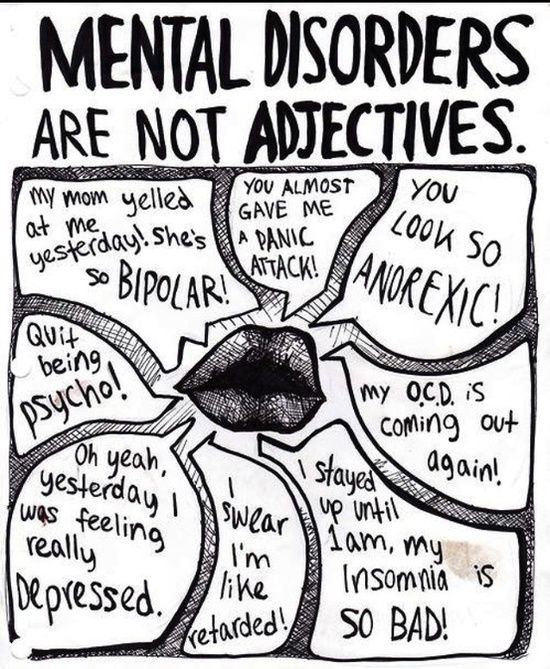
2)      If you think someone you know might have a mental illness, seek professional advice. Putting labels on mentally ill individuals or making jokes about mental illness is harmful, disrespectful, and unkind.
3)      Start having conversations about mental health and illness. By acknowledging its existence and impact on society, we are taking steps to better understand and manage mental illness, while being supportive of those who suffer from it.
4)      One size does not fit all when it comes to treating mental illness. Do not discourage loved ones from pursuing various forms of treatment and support. Medication alone will not work in all cases. Many patients also need therapy, other forms of self-help, and community support to get better.
5)      Be as supportive as you can. It’s certainly not easy dealing with a loved one with a mental illness. But those with mental illness do not deserve to be ostracized or mistreated. Support from family and friends can go a long way in managing and recovering from mental illness.


  References

1.      National Institute of Mental Health (2013). The Numbers Count: Mental Disorders in America. Retrieved May 5, 2016: http://www.lb7.uscourts.gov/documents/12-cv-1072url2.pdf
2.      U.S. Department of Health and Human Services (2014). Mental Health Myths and Facts (2014). Retrieved May 4, 2016: https://www.mentalhealth.gov/basics/myths-facts/index.html  
3.      U.S. Department of Health and Human Services (2014). Mental Health Myths and Facts (2014). Retrieved May 4, 2016: https://www.mentalhealth.gov/basics/myths-facts/index.html  
4.      U.S. Department of Health and Human Services (2014). Mental Health Myths and Facts (2014). Retrieved May 4, 2016: https://www.mentalhealth.gov/basics/myths-facts/index.html  
5.      U.S. Department of Health and Human Services (2014). Mental Health Myths and Facts (2014). Retrieved May 4, 2016: https://www.mentalhealth.gov/basics/myths-facts/index.html  
6.      World Health Organization (2014). Mental Health: a state of well-being -10 Facts on Mental Health. Retrieved May 5, 2016: http://www.who.int/features/factfiles/mental_health/mental_health_facts/en/
7.      The National Alliance on Mental Illness (n.d.). Mental Health Facts in America. Retrieved May 4, 2016: https://www.nami.org/NAMI/media/NAMI-Media/Infographics/GeneralMHFacts.pdf
8.      The National Alliance on Mental Illness (n.d.). Mental Health Facts in America. Retrieved May 4, 2016: https://www.nami.org/NAMI/media/NAMI-Media/Infographics/GeneralMHFacts.pdf
9.      U.S. Department of Health and Human Services (2014). Mental Health Myths and Facts (2014). Retrieved May 4, 2016: https://www.mentalhealth.gov/basics/myths-facts/index.html  
10.  U.S. Department of Health and Human Services (2014). Mental Health Myths and Facts (2014). Retrieved May 4, 2016: https://www.mentalhealth.gov/basics/myths-facts/index.html  
11.  U.S. Department of Health and Human Services (2014). Mental Health Myths and Facts (2014). Retrieved May 4, 2016: https://www.mentalhealth.gov/basics/myths-facts/index.html  
12.  World Health Organization (2014). Mental Health: a state of well-being -10 Facts on Mental Health. Retrieved May 5, 2016: http://www.who.int/features/factfiles/mental_health/mental_health_facts/en/index4.html
13.  U.S. Department of Health and Human Services (2014). Mental Health Myths and Facts (2014). Retrieved May 4, 2016: https://www.mentalhealth.gov/basics/myths-facts/index.html  
14.  U.S. Department of Health and Human Services (2014). Mental Health Myths and Facts (2014). Retrieved May 4, 2016: https://www.mentalhealth.gov/basics/myths-facts/index.html  
15.  U.S. Department of Health and Human Services (2014). Mental Health Myths and Facts (2014). Retrieved May 4, 2016: https://www.mentalhealth.gov/basics/myths-facts/index.html  
16.  U.S. Department of Health and Human Services (2014). Mental Health Myths and Facts (2014). Retrieved May 4, 2016: https://www.mentalhealth.gov/basics/myths-facts/index.html  
17.  U.S. Department of Health and Human Services (2014). Mental Health Myths and Facts (2014). Retrieved May 4, 2016: https://www.mentalhealth.gov/basics/myths-facts/index.html  
18.  Parekh, R. (2015). Warning Signs of Mental Illness. American Psychiatric Association. Retrieved from: https://www.psychiatry.org/patients-families/warning-signs-of-mental-illness 

Images
1.      Mental Health America. (2016). Mental Health Month [Image], Retrieved May 5, 2016: http://www.mentalhealthamerica.net/may
2.      Mental Health America (2015). Infographic B4Stage4: Changing the Way We Think About Mental Health [Image], Retrieved May 5, 2016: http://www.mentalhealthamerica.net/infographic-b4stage4-changing-way-we-think-about-mental-health
3.       Growth Guided (2015). Here Are Five Issues Millions of Americans Face When Getting Help With Mental Illness [Image], Retrieved May 5, 2016: http://www.growthguided.com/here-are-five-issues-millions-of-americans-face-when-getting-help-with-mental-illness/
4.      Fanpop (n.d.). Mental Health Awareness – “Snap Out Of It.” [Image], Retrieved May 5, 2016: http://www.fanpop.com/clubs/mental-health-awareness/images/36499936/title/snap-out-photo
5.      Fricke, P. (2013). Functional Mental Disorders. [Image]. Retrieved May 5, 2016: http://www.siue.edu/~pfricke/
6.      The London Therapy Center (2015). Some Mental Health Facts & Myths [Image], Retrieved May 5, 2016: http://www.thelondontherapycentre.com/#!some-mental-health-myths---facts/a1jq7


Monday, 28 March 2016

March is Nutrition Month!


Who better to ask about nutrition, than a dietitian?! This month, we have interviewed Kiran Bains, RD, the CEO of a nutrition counselling and corporate seminars company, Edo Vivo, to provide our readers with great nutrition tips and information! She has been featured on various Huffington Post news articles and other news sources! We welcome her to Perceptions4Change.

Q: First and foremost, when seeking nutrition advice, do you recommend readers go to a dietitian or nutritionist? What is the difference?`

A:  Dietitians for sure! As per Dietitians of Canada, Dietitians are health care professionals who have earned a Bachelor’s degree specializing in food and nutrition and have supervised practical training through a university or an approved hospital or community setting. Dietitians are registered with Provincial Regulatory Bodies and are the only professionals who can use the titles “Registered Dietitian”, “Professional Dietitian” and “Dietitian”, which are protected by law. In most provinces there are not regulatory standards to protect the title “Nutritionist”.


Q: What about internet-trending diet advice from foodies? Clearly, if it’s trending, it must work…?
A: It is important to remember not all “trends” are truly healthy or safe, for that matter. You must always look at who and where the information is coming from. Look to see if the source of information is a credible source. For example, is the information from a dietitian or is it from someone who doesn’t have professional nutritional training?  Has the person who wrote the information cited any credible scientific and research-based articles? Is there factual evidence based on clinical trials that this is healthy for you?   When it comes to diet advice, I always say, just stick to the basics. I think we make healthy eating way too complex. There surely is a science behind it which can appear complex and daunting but it truly is simple.  If you’re ever in doubt, ask a dietitian. We are always keeping up with the latest trends and comparing it to what research actually says. You can trust us!    


Q: What do you think is the most important nutrition-behaviour to upkeep? Because we all know sometimes we have a “cheat” day.
A:  If I had to choose one thing to summarize a healthy “nutrition behavior”, I would say, aim to have almost all of your food originating from as closest to the original source from nature as possible. In other words, aim to have as much “whole foods” in your diet as possible and stray away from processed foods and foods with added sugars. This has been my long-standing diet advice and despite all of the “trends” out there, I still stick with this. It has always worked for my clients and myself.
If you want to get more specific, aim to have at least 50 or more percent of your daily intake from vegetables/fruit (mainly vegetables). The rest should come from a mix of protein and carbohydrates. For protein, it should be from lean sources like beans and lean meats (I mostly have fish, eggs, and poultry). For carbohydrates, go for those that are high in fiber like quinoa and oatmeal, for example. And no, carbs aren’t all that bad; you just have to choose the right ones!
Aside from that, I do have meals where I so-called “cheat” here and there but I don’t think of it as “cheating”. I prefer to think of it as “living”.  I became a dietitian because I really do love food all in all and yes, that includes high fat, creamy, and sugary foods but when it comes to things like that, it’s important to know what “moderation” is.  For example, I will have a few bites of cake, shared between friends and I am rather satisfied by that.  The key is to aim for balance in your diet. If I eat something unhealthy one meal, I will aim to balance out the rest of my meals that day to ensure they are healthier.
  
Q: Do you think the food industry plays into the nutrition advice the public receives?
A: Yes, indeed. For example, Dairy Farmers of Canada disseminates a lot of information on the importance of calcium and vitamin D requirements. They tend to stress the need and rationale for ensuring a daily intake of roughly 1000mg of calcium daily depending on your age. They also put out a lot of resources with recipes using dairy products to help the public reach their daily intake.  In general, the food industry does take advantage of the recommendations Health Canada puts out in relation to nutrition requirements.

Q: If readers want more information, where can they go?
A: You can find me on Instagram (@edovivo) and facebook (www.facebook.com/edovivo) or email me at Kiran.Bains@edovivo.com if you have any questions of requests. I also refer my clients to the Dietitians of Canada website for credible nutrition information (http://www.dietitians.ca/)

Thank you for your time Ms. Bains. We appreciate you taking the time out of your busy schedule to answer some questions for our blog!


Saturday, 20 February 2016

Human Trafficking: Do You Really See Me?


Theresa Flores is a human trafficking survivor.1 If you have not watched her TED Talk2, I urge you to do so now.  


As I listened to her heartbreaking story, I was overcome by three terrifying realities:

1)      at some point in my life, and without knowing it, it’s possible that I lived next to, went to school with, or worked with someone who was being trafficked.
2)      many of us are clueless about domestic trafficking within our own communities.
3)      human trafficking does not just affect its victims. From a health perspective, it has the potential to harm whole communities.

The International Labor Organization (ILO) estimates that globally, about 21 million children, women, and men are victims of human trafficking (2012).3 These ILO statistics show the most vulnerable populations, business sectors where exploitation is most prevalent, and the illegal profits annually earned by traffickers.4

The Institute for Trafficked, Exploited & Missing Persons (ITEMP) states that 100,000 children in the U.S. are trafficked each year, and 1,000 between the ages of 13 and 17 are trafficked internationally.5

Let’s look at trafficking from a health perspective using a fictional victim named Anna. While being trafficked across state lines to a brothel for sex work, Anna contracts TB disease that becomes active, but goes undiagnosed and untreated.

She is in contact with other workers, 10-20 clients daily, and periodically frequents public venues, all the while talking, coughing, and sneezing.  She is also likely having occasional unprotected sex.

Anna’s clients could be single, married, with children, and have jobs. How many people will eventually be infected with, and spread, TB disease and STDs? What happens when those with active TB disease travel (via cars, trains, planes, buses) to other cities and states without a proper diagnosis and treatment? How much would it cost each community to test and treat patients, and trace the origin and spread of the disease?

Theresa’s story made me ask myself these questions:

- Why are so many of us ill-informed about domestic human trafficking?
- Would I know where to find the resources to help them?
Would I recognize the less obvious signs of a trafficking victim?

The Ohio Human Trafficking Task Force’s June 27, 2012 report highlighted something crucial -  domestic human trafficking has flown under the radar for a long time, because much of the data (especially at the federal level) has, for years, been more focused on international human trafficking.6 As such, many of us may associate human trafficking with foreign nationals being shipped against their will across borders and state lines, without considering the possibility of our neighbors, family, and friends becoming victims of this illegal trade. In addition, as seen in Theresa’s case, many believe that these young women choose to become prostitutes, and as such, they cannot be trafficking victims.

The Ohio Department of Health7 states that, “Ohio has ranked as high as fifth among all states in total reported human trafficking cases with Toledo being identified as the fourth highest ranking city in the nation for recruiting victims into the illegal trade (2016).” Fortunately, Ohio now has various organizations that: (i) research the prevalence of domestic trafficking, (ii) provide resources to raise awareness, and (iii) provide services for victims and survivors.

To name a few, organizations like the Central Ohio Rescue and Restore Coalition8 and the Ohio National Human Trafficking Resource Center9 work with service providers and other professionals, law enforcement, and volunteers, etc by offering education, training, advocacy, and legal representation. Nonprofits like The Daughter Project10 and Grace Haven11 offer rehabilitative group homes for trafficking victims (girls). Others like Freedom A La Carte12 give survivors training and jobs, which is critical for their integration back into society.

Local citizens can get access to these resources at their local library, online, or from departments that offer human services, and be a part of the process in raising awareness, while providing support for victims and survivors.


There is one absolute truth that we cannot ignore – anyone can be a victim of human trafficking. Anna could be you or me. It just takes the wrong person to see the right circumstances and opportunity to destroy your life.

References

1.      TraffickFree – About TraffickFree (2016). Retrieved February 16, 2016: https://www.traffickfree.com/about.php 
2.      TEDx Columbus – Theresa Flores – Find a Voice with Soap (2011). Retrieved February 16, 2016: https://www.youtube.com/watch?v=5QW_nsAjweE
3.      Forced Labor, Human Trafficking, and Slavery. (2012). Retrieved February 16, 2016: http://www.ilo.org/global/topics/forced-labour/lang--en/index.htm
4.      Statistics and Indicators on Forced Labor and Trafficking. (2012). Retrieved February 17, 2016: http://www.ilo.org/global/topics/forced-labour/policy-areas/statistics/lang--en/index.htm
5.      Institute for Trafficked, Exploited & Missing Persons (ITEMP) (2016). Retrieved February 19, 2016: http://www.itemp.org/humantrafficking101/humantraffickingfacts.html
6.      The Ohio Human Trafficking Task Force (2012). Retrieved February 18, 2016: http://humantrafficking.ohio.gov/OhioHumanTraffickingTaskforce.aspx
7.      Ohio Department of Health – Human Trafficking Resources (2016). Retrieved February 18, 2016: http://www.healthy.ohio.gov/sadv/htraffick.aspx
8.      Central Ohio Rescue and Restore Coalition (2016). Retrieved February 18, 2016: http://www.centralohiorescueandrestore.org/
9.      Ohio National Human Trafficking Resource Center (2016). Retrieved February 18, 2016: https://traffickingresourcecenter.org/state/ohio
10.  The Daughter Project (2016). Retrieved February 18, 2016: http://thedaughterproject.org/#/welcome
11.  Grace Haven (2016). Retrieved February 18, 2016: http://gracehaven.me/
12.  Freedom A La Carte (2016). Retrieved February 13, 2016: http://freedomalacart.org/news/

Image
The Medina County Coalition Against Human Trafficking. (2015). Human Trafficking By The Numbers [Image], Retrieved February 19, 2016: https://traffickjamming.wordpress.com/2015/06/24/june-2015-meeting-agenda/

Tuesday, 16 February 2016

The case of OJ vs. the Orange; The jury trial


Your honor... Today this glass of orange juice or OJ you see before you is on trial for causing several humans to become overweight. Take this boy, Tommy for example. He’s 12 years old and doctors have prescribed more physical exertion to bring his body weight to a healthier level. Tommy would consume about 2 glasses of orange juice every morning. Generally, juices are full of free sugar (glucose, fructose, sucrose etc.) which are often added by the manufacturer to enhance flavor. According to a Press Release dated 4th March 2015, the World Health Organization outlined a guideline recommending adults and children to reduce their daily intake of free sugar to less than 10% of their total energy intake (1).

Consider Tommy’s breakfast table...On one end is an orange and on the other is a glass of orange juice.

Constituents
OJ/Orange Juice
(100ml)
The Orange
(Fruit diameter: 8 inches)
Calories
47
62
Sugar
8.81 grams
12.25 grams
Dietary Fibre
0.2 grams
3.1 grams
% of Recommended Daily Intake
4%
3%


The Orange is roughly 8 inches in diameter, a proportionate fruit carrying 62 calories, 3.1g of fiber and 12.25g of sugar (2). The glass holds 100ml of Orange juice carrying 8.81g of sugar, 0.2g of dietary fiber and 47 calories (3). Now the brand of the juice has a direct impact on the exact caloric constituents. Given the above stated values, one could assume that after consuming one orange you are more likely to feel fuller. On the other hand after one 100ml glass of orange juice, you are more likely to seek out the fridge for a second serving.

So it’s like that at breakfast Tommy could have just one orange which makes up for 3% of his Recommended Daily Intake (RDI) (2). Or he could have about two 100ml glasses of orange juice which accumulates to 4% of his RDI (3). It is important to note that we are still referring to his breakfast table and that additional juice may be consumed at lunch and dinner. However the juice is more accessible and easy to consume. The orange on the other hand requires peeling and additional preparation.

The director of the World Health Organization’s Department of Nutrition for Health and Development had this to say about free sugars...

“We have solid evidence that keeping intake of free sugars to less than 10% of total energy intake reduces the risk of overweight, obesity and tooth decay,” (4)

As human beings we have a tendency to assume that “more” is always better. This is not always the case. Too much of anything is not great for your body. In fact your mantra should be “everything in moderation”. Take sugar for example, too much of sugar in your diet can increase your risk of becoming overweight. This in turn may result in chain reactions that could lead to Type II Diabetes, Atherosclerotic heart disease or a predilection for cancerous outcomes. The orange in its natural state harbors additional constituents such as fiber etc that aid your digestive system’s motility while facilitating a gradual absorption of sugar.

This case is a bit murky, that I am aware of. The choice remains among individuals like Tommy who may go for the healthier fruit option or go for the more accessible glass of OJ. Statistics even show that with increasing age, the consumption of sweetened drinks increases among children and young adults (4). Given this trend and all this information, the question remains... Is there enough evidence to find this glass of OJ guilty?

References

(1) World Health Organization. (2015, November 26). Media Centre; WHO calls on countries to reduce sugars intake among adults and children. Retrieved from World Health Organization : http://www.who.int/mediacentre/news/releases/2015/sugar-guideline/en/

(2) Fatsecret . (2015, November 26). 1 Fruit Orange. Retrieved from Fatsecret: http://www.fatsecret.com/calories-nutrition/usda/oranges%3Fportionid%3D33208

(3) Fatsecret. (2015, November 26). 100ml Orange Juice . Retrieved from Fatsecret: http://www.fatsecret.com/calories-nutrition/usda/orange-juice?portionid=1137131&portionamount=100.000

(4) Home - Health Reports - Beverage consumption of children and teens. (2015, November 27). Retrieved from Statistics Canada: http://www.statcan.gc.ca/pub/82-003-x/2008004/article/10715/6500232-eng.htm


Public Health 007

Let's talk about the “three coughs” or three major problems that threaten global health from the perspective of a U.S. Scientist.

He believes the first problem is the emergence of new diseases such as; Middle Eastern Respiratory Syndrome (identified last year), H7N9 avian influenza flu and SARS (which swept the world in 2003). He goes on to express his appreciation of the efforts made by Chinese health authorities in relating all the information about the H7N9 strain and thereby allowing the disease to be considerably contained worldwide. These new infectious diseases pose 2 problems; Health care professionals have no knowledge about them when they develop and we don’t have any natural immunity against them. We can only assume their devastation...

The 2nd “cough” is the ever growing risk of multidrug resistant tuberculosis. And the 3rd global health issue he addressed was the threat of Bioterrorism in today’s world and the need for wide spread surveillance in order to prevent mass disasters. The growing dangers of measles and HIV infection was also cited in the article and ended on a happier note; how the efforts of PEPFAR (the President’s Emergency Plan for AIDS Relief) had saved millions of people from AIDS.

The scientist quoted throughout the article was the director for the Centre for Disease Control, Dr Thomas Frieden from a few years ago...

Infectious disease! Whether it was vector borne dengue or manmade biological weapons, microorganisms continue to rule our microscopic world. On reading the article, the 1st “cough” and the 3rd “cough” caught my attention. With our growing population and the effects of global warming, I would not be surprised if I hear about the emergence of a new avian flu in the months/years to come. It is critical that we pay more attention to the way we interact with our environment and there by aid in the emergence of deadly organisms. As a health care professional it would be ideal to create a upstream solution to this problem. With the current data at hand, one could assume 2 things; that, by invading the natural human free ecosystems, we expose ourselves to organisms that lay dormant and there by disturb the sleeping horrors that lay in the forests. The second possibility is that we create ideal environments in our communities for disease progression and evolution. Either way, it is time to create a vaccine for our arrogance.

If we didn’t have enough problems to start with, we now must protect us from ourselves. Bioterrorism has been the arena for much debate over the years. It started with the study of deadly organisms like Small pox and has now become the reason that nations go to war. As a public health professional, I would ponder on the relevance of bioterrorism to my field. I could argue that it is not my fight, that it is a fight at the macro level. But I believe it is also a major problem that public health would have to face in the future. The world just became more like a James Bond movie.